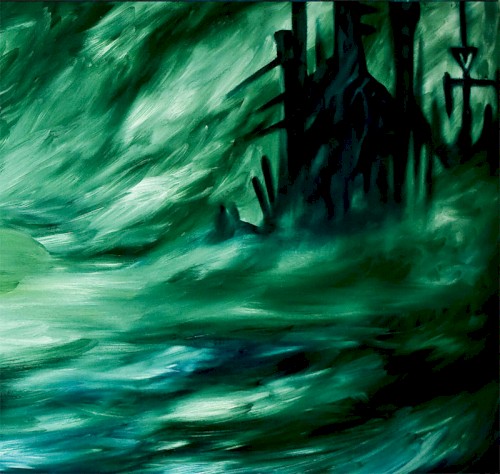
Al-Azif
The Great Old Ones
- Style
- Post-Black
- Label
- Les Acteurs de L'Ombre
- Year
- 2012
- Reviewed by
- Charles
Those of you that still feel there’s life in post-black metal very definitely need to track this down. Indeed, those that once enjoyed the subscene but are now tired might also find their interest newly re-pricked. Al-Azif is a darkly atmospheric release, with a powerful sound greatly augmented by some clever instrumentation and distinctive harmonic ideas. The title track begins in an imposing fashion, suggesting a sense of ominous power that never really dissipates throughout the album. Synths lurk distantly behind some big, slow, clanking chords, lending it the cinematic power of the more grandiose black metal. The track later morphs into one of those ‘uplifting’ progressions that you’d find in more upbeat post-metal, like the abovementioned deafheaven, but actually this is one of a relatively small number of times this happens on the album. That’s fortunate, because the band’s aesthetic calls for darkness; a suitably gloomy aura is maintained, regardless of whatever tricks the band throws, from the lurid, seasick ambiance of Jonas, to the tribalistic percussion that closes The Truth.
The six long tracks here yield some very worthy highlights. Visions of R’lyeh rumbles forth, powered by a mid-tempo backbeat, with synths and rhythm guitar able to eke out tinglingly melancholic post-rock harmonic patterns. After four minutes, it transitions into a woozy indie section, which to me sounds like something from late-90s Radiohead. Much harsher is the aforementioned Jonas. Here the delivery is similarly mid-paced, but the tonalities and instrumentation are uglier, with a growling, chugging riff wrestling with quieter moments of perplexingly formless dissonance. This is probably the most “Lovecraftian” track on Al-Azif, for my money, climaxing in a properly deep and dark black metal riff of earthshaking power. The proggy, string-inflected swirl of Rue d’Auseil then enters as a wistful, possibly Giant Squid-inspired counterpoint. Very nice.
The Great Old Ones are entering a now-familiar scene, with its own lingo that they are not yet ready to deviate from. Nonetheless, there are plenty of creative moments here, in which the band reveal a great potential. As suggested above, those that are still intrigued by the post-black thing will do well to seek this out.
Reviewed by Charles — April 2, 2012