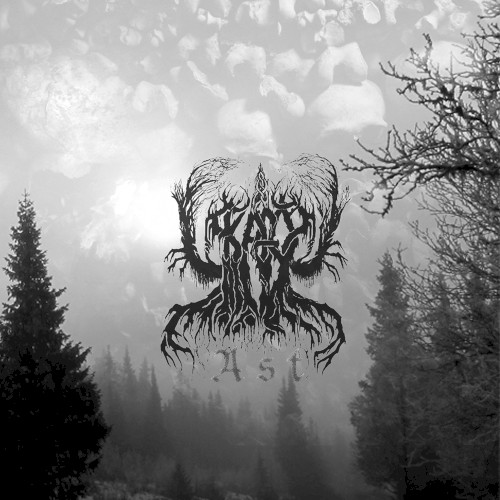
Ást
Skagos
- Style
- Black Metal/Folk
- Label
- Northern Horde
- Year
- 2009
- Reviewed by
- Charles
Having said that, you would never describe Skagos in those terms; despite their upcoming collaboration with Panopticon this is much less oppressive in tone. The whole album, even at its heaviest, has the freewheeling, organic feel of a campfire jam. Ást (the title is a Norse word meaning something not-very-black-metal) represents a distinctive strand in this particular microgenre, which sprouted through acts like Weakling, gained some mainstream attention through Wolves in the Throne Room and has now spawned a real proliferation of upstarts. Skagos are very different from both those bands, though there is a fleeting resemblance to the latter in the sweepingly epic approach to black metal blasting (this is a comparison I’m aware the band gets very pissed off with, and for good reason: I reiterate the word fleeting in the previous sentence. I've read interviews where the band express distate for latter day Wolves...). A much stronger influence in many respects would seem to be Agalloch. Ást is deeply infiltrated by comparable acoustic folk ideas and clear melodicism to an extent that I don’t think I’ve heard in another black metal band (perhaps Ulver's Bergtatt). Five songs (excluding the introduction) take up 50 minutes, and each carefully and clearly follows a train of thought, never losing a sense of coherent and engaging melodic development even in its most intense moments. A Night that Ends…, for example, is essentially a nine-minute buildup, starting life as a sweet acoustic guitar strum, piercing the tranquility with multiple, richly harmonised electric lead lines (interlocking almost like a choral ensemble), before eventually intensifying into a deep and rumbling blast. Throughout, its fiery minimalism enables it to retain a meditative quality, comparable to someone like Pelican.
The best song here, and one which deserves a closer look in this review, is Caliginosity. We open with nothing but hazy, echoing guitar tones like beads of water rolling in drips from a leaf. Simultaneously eerie and calming. Then, an explosion into a droning black metal whirr, over which twisting lead harmonies wail painfully. Approaching three minutes, the blasting assumes the shape of a real melody, dark and ambiguous sounding but something that stays with you, finding an echo in the acoustic folk into which this gradually winds down once again. This guides us into another melody, this time a plaintive one, which once more forms a platform for a slow but steep climb in intensity. It ends up as an aggressive blast, twisted into gleamingly euphoric shape by the same tune, now given electric power and transformed into a swoopingly anthemic lead guitar line.
As (some of us) eagerly await their upcoming split with Panopticon, I recommend revisiting Ást. It needs time to really sink in; you have to follow these songs and get to know their train of thought. But given commitment from the listener this is an evocative, powerful black metal album, richly coloured by acoustic folk and demonstrating a real clarity of vision.
Reviewed by Charles — September 11, 2010