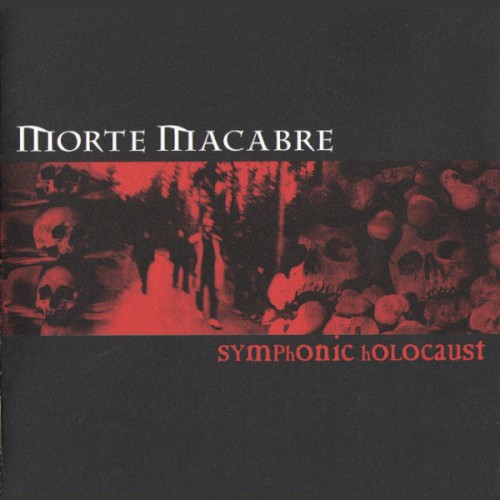
Symphonic Holocaust
Morte Macabre
- Style
- Prog Rock
- Label
- Mellotronen
- Year
- 1998
- Reviewed by
- Charles
Symphonic Holocaust is a mixture of horror theme reworkings and much less structured prog jams. The first two (proper) tracks here are both pretty faithful Frizzi renditions- the first is the theme from Gates of Hell and the second is from The Beyond. The former is transformed into something surprisingly graceful, because of the instrumentation- based mainly around a very rich mellotron sound- and swung rhythms make it rhapsodic where the original was shuffling. It stretches out into quite an intense solo section, with an open-ended feel. The latter is very effectively preceded by a percussive, improvisatory ambient section like the boring bit in King Crimson’s Moonchild- but this has a sinister, frightening quality that perfectly sets up the ominous, dirge-y riffing of the piece itself. Again, the familiar (to anyone who has watched Fulci’s films) path is diverged as atmospheric, freeflowing sounds swell into the foreground.
Other “covers” here include a very faithful version of the improbably, almost cheesily graceful Opening Theme from Cannibal Holocaust, and Lullaby, from Rosemary’s Baby. The latter is very clever, based around a really funereal bass plod that underpins the melody perfectly. The ending is immense.
The other tracks are very different; more free flowing. The closing title track is 17 minutes long, and feels a bit like what the rest of the album has been building up to. It’s slow and brooding, shifting through sullen, angry moods. But the textures are very rich, and it feels organic, like a band jamming along to the start of Inferno. When they are in this mode, they often embrace a timeless feel, letting the nuances of the sound itself talk for them instead of big, recognisable melodic or rhythmic ideas- as with Quiet Drops.
This is in many ways a very clever album, although it’s often clear what they are doing and where they are going; it doesn’t have that edge of undpredictability that some might hope for in prog. However, it succeeds through its smart combination of menacing horror ideas and references with a rich, free flowing approach.
Reviewed by Charles — January 25, 2010