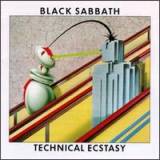
Technical Ecstasy
Black Sabbath
- Style
- Heavy Metal
- Label
- Warner Music
- Year
- 1976
- Reviewed by
- Charles
So we have a record that derails the continually-evolving train of thought of the previous five years, which had progressed, step by adventurous step, from unprecedentedly heavy blues-derived bombshells through to ambitiously proggy, oppressive metal epics such as Symptom of the Universe. Somehow muscling this out of the way, we get cheery but slightly malnourished hard rock, accentuated by some jubilantly goofy synth fumblings and gleefully perverted by dalliances with sleazy funk. Whilst it probably goes without saying that this is the first Sabbath album that fails to take its place in metal’s illustrious canon, it is not without its charms.
Highlights are the schoolboy pop-rock of Back Street Kids, which, as the opener, is likely to have your ear drums doing double takes the first time you put it on (if you were to listen to their albums through in chronological order, that is). Then you have the closer, Dirty Women, a complex composition that shifts from singalong melancholy to rock and roll stomping and back, by way of proggy instrumental interjections. The multi-layered All Moving Parts is as straightforward as two robots having android-sex on an escalator, which is to say, not very. There isn’t a song here that doesn’t have anything to recommend it, but those that do embrace a more straightforward, upbeat rock feel would be blown out of the water in under four minutes with the opener of the next record.
Ultimately this has to be seen as the first wobble. Ozzy would soon leave and although, of course, there were plenty of highlights to come, there were also plenty of low points (one of which I also foolishly volunteered to talk about this week). On Technical Ecstasy, they discarded the road map that they had taken such liberties with entirely, and maybe lost their direction (temporarily) as a result. Certainly, whilst the experimentation on this record is intriguing and makes it well worth listening to, they lost the dark heart that made their first albums so compelling. Thus, they concluded the first (best!) period in Black Sabbath’s history.
Reviewed by Charles — May 3, 2009